Alabama regulated plate readers in 2022, before most states. The chapter was adopted by the Alabama Justice Information Commission under Code of Ala. 1975 § 41-9-620, published Jan. 31, 2022, and took effect March 17, 2022. It is enforced through ALEA's Criminal Justice Information Services (CJIS) Division, the same division that governs NCIC access.
Plain-language summaries; quoted phrases are verbatim from the rule. Read the primary text at the links above.
Provides uniform direction to all Alabama law enforcement agencies on the use of LPR systems and LPR data and the uniform retention of data collected, “intended to ensure LPRs and LPR-generated data are used only in a lawful manner to serve the public interest, preserve civil liberties and support a law enforcement agency's criminal investigative and public safety responsibilities.”
Defines the capturing agency (the agency that operates the reader and controls its data), the LPR system (mobile or fixed high-speed cameras plus algorithms that convert plate images into computer-readable data), LPR data (plate number, date/time, coordinates, photograph), personal identifying information, and the State LPR Registry maintained by ALEA.
Data may be collected only for a criminal justice or public safety purpose, and must be moved from the camera to a secure repository controlled by the agency within 24 hours of collection.
Use is limited to criminal justice or public safety purposes, expressly including locating missing persons, investigating trafficking, and identifying vehicles. “LPR data shall not be shared with any entity for a non-criminal justice or non-public safety purpose” and “shall not be sold to any entity for any reason.” Every agency must keep an access log (who, when, why) and a dissemination log (what, when, to which agency, for what purpose).
Capturing agencies submit plate number, date/time, location and originating-agency identifier to ALEA's CJIS Division within 48 hours. The registry may be queried only through an ALEA CJIS system, by a criminal justice agency, for a criminal justice or public safety purpose; ALEA keeps an access log of every query.
LPR data and access logs are retained no more than five years, then destroyed. Records tied to an active investigation or pending case may be held longer if the agency notifies ALEA. The five-year ceiling tracks the federal standard in 28 CFR Part 23 for multijurisdictional criminal intelligence systems. Many Alabama agencies choose far shorter operational retention (30 days; seven days under Flock's August 2026 policy).
“The ALEA CJIS Division will audit all capturing agencies at least once every three years.” The agency head receives notice of the audit and the results. An agency found non-compliant has 90 days to comply; if still non-compliant, its access to ALEA information systems relating to LPR is suspended until it is compliant. All LPR data plus access and dissemination logs must be available to ALEA for audit.
Before deploying readers an agency must adopt and publicize a written policy covering which databases scanned plates are compared against, retention, sharing with other agencies, and operator training. A vendor may host the data only after signing an ALEA CJIS Contractor/Vendor CJI Access Security Agreement.
Misuse of LPR systems and data “will be investigated in the same manner as alleged misuse of other ALEA information systems.” The Moody and Springville cases in 2026 ended in a termination and a resignation, which is the rule working as written.
Each April, ALEA's CJIS Division reports to the Commission on the previous year's statewide audit results, agency compliance with the public-policy requirement in .08, and misuse findings under .09.
Rule .07 is the heart of Alabama's accountability model. Every agency that captures plate data is inspected by ALEA CJIS at least once every three years, with the results delivered to the agency head. Fail to fix a deficiency within 90 days and the agency loses ALEA LPR access. Audit findings and misuse cases roll up into an annual report every April (rule .10). Alabama agencies have been on this audit cycle since 2022.
Personal searches, like the 2026 Moody and Springville cases, are misuse under .09 and are investigated like misuse of NCIC. Both officers are gone.
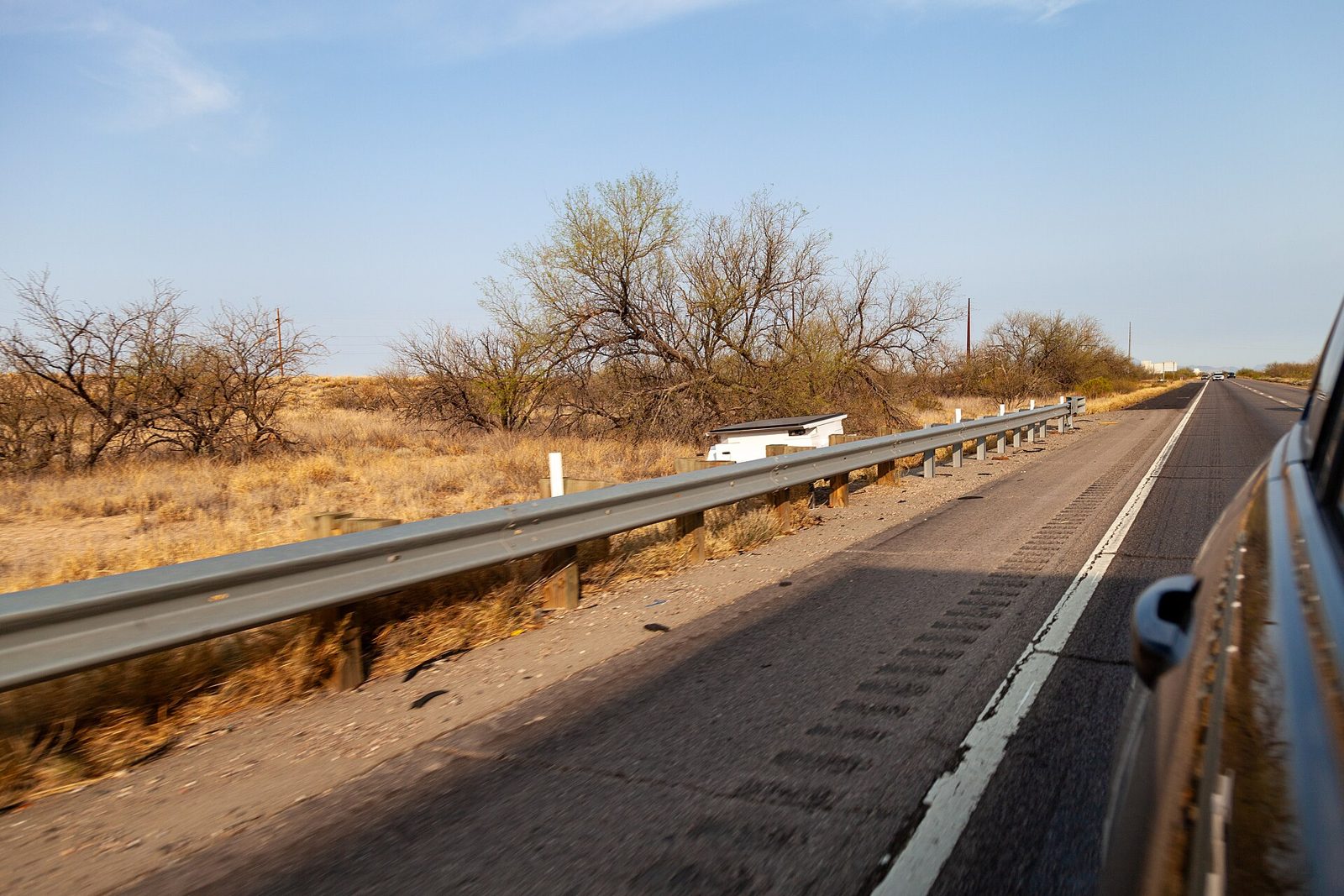
Rule .04 names the uses Alabama considers legitimate: locating missing persons, investigating trafficking, and identifying vehicles connected to crimes. That is the AMBER Alert child, the dementia patient on I-65, the trafficking crew's rotating rental cars, and the sedan that fled a shooting.
Guardrails that strengthen 265-X-6 deserve support: documented search reasons, short default retention with evidence holds, monthly internal audits, public transparency portals, and criminal penalties for personal use. What Alabama should not do is copy Florida and strip readers off the interstates — the exact roads a kidnapper, a fleeing killer, or a confused grandfather will be on. Every case on this site that ended on an interstate is a reason why.